

Ganesha Fortune Overview for OK Rummy
Ganesha Fortune is a themed reel-based casino title inspired by traditional Indian symbolism, built around a structured grid, recognizable icons, and a clearly defined gameplay loop. Within the OK Rummy environment, this game can be understood as a system that combines standard reel mechanics with feature-based variations, all organized in a predictable and easy-to-follow format.
The core idea behind Ganesha Fortune is based on balance. The base gameplay introduces symbols, paylines, and combinations, while the feature elements introduce controlled variation through additional mechanics. This makes the game suitable for structured explanation, as each part of the system connects logically to the next.
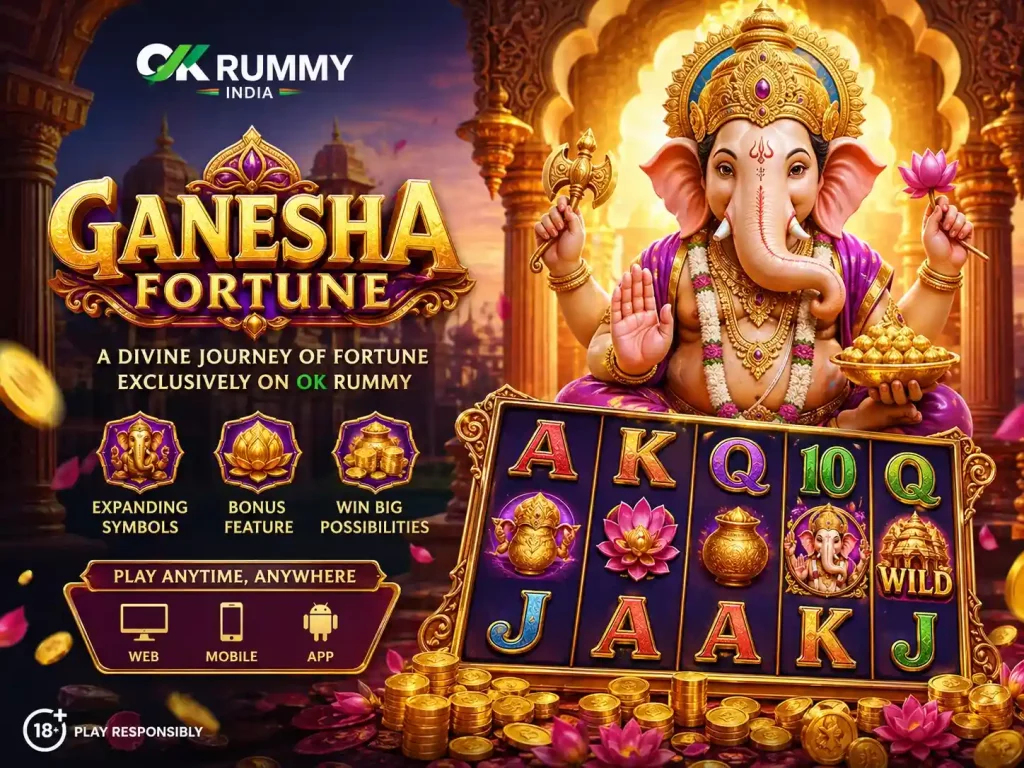
From a content perspective, it is important to separate the game into its key layers. These include the visual identity, mechanical structure, and functional logic. The visual identity is defined by Indian cultural elements, deity symbolism, and decorative patterns. The mechanical structure includes reels, paylines, and symbol positioning. The functional logic includes special symbols, triggers, and feature sequences.
Below is a breakdown of the main game elements and how they operate within Ganesha Fortune.
| Game Element | Function | Role in Gameplay | User Focus |
|---|---|---|---|
| Reel Grid | Displays the structured arrangement of symbols across multiple reels. | Acts as the foundation for every spin and determines symbol positioning. | Observing how symbols align within the grid. |
| Paylines | Defines the paths used to evaluate winning combinations. | Connects symbols across reels to form valid results. | Tracking active lines and symbol alignment. |
| Ganesha Symbol | Acts as a special high-value symbol within the system. | Plays a key role in forming strong combinations and feature interactions. | Monitoring its presence during spins. |
| Thematic Elements | Represents cultural visuals and symbolic design elements. | Establishes the identity and recognizability of the game. | Identifying visual patterns and theme. |
Ganesha Fortune belongs to the broader category of Slots, where gameplay revolves around reels and symbol combinations rather than progressive missions or layered systems. This allows the game to maintain a clear structure that is easy to describe and analyze.
Another important aspect of the game is how its internal layers interact. The visual layer introduces symbols and theme, the mechanical layer handles spins and combinations, and the functional layer manages special behaviors such as feature triggers. Each layer operates independently but contributes to a unified gameplay cycle.
To better understand how these layers are distributed within the overall system, the following chart illustrates their relative importance.
The chart highlights that symbols and feature mechanics carry a large portion of the gameplay structure. Paylines support how combinations are formed, while the theme provides the visual identity without affecting the mechanical flow.
Another useful way to organize the content is by dividing the game into content areas. Each area explains a different part of the system and contributes to a full understanding of how the game operates.
| Content Area | What It Explains | Why It Matters |
|---|---|---|
| Game Identity | Covers theme, symbols, and overall structure of the game. | Defines the topic and sets the foundation for understanding. |
| Core Mechanics | Explains reels, paylines, and combination logic. | Provides functional understanding of gameplay. |
| Special Features | Describes feature triggers and additional mechanics. | Highlights the unique parts of the system. |
| Platform Context | Shows how the game fits within OK Rummy. | Connects gameplay with platform structure. |
Within OK Rummy, Ganesha Fortune can be accessed through the main platform interface after completing a standard login process. Once inside the platform, users navigate through categories or search functionality to locate the game. This access flow remains consistent across desktop and mobile environments, including usage through a dedicated app interface.
The first section of the page should focus on clarity. It introduces the game, explains its structure, and prepares the foundation for deeper analysis in the next sections. The goal is to ensure that every element — from symbols to mechanics — is clearly defined before moving into feature-specific behavior and gameplay flow.
Core Mechanics and Gameplay Flow of Ganesha Fortune
After establishing the structure and identity of Ganesha Fortune, the next step is to break down how the game operates during active gameplay. This section focuses on the mechanics behind each spin, how symbols interact, and how the gameplay cycle progresses from one phase to another.
At its core, Ganesha Fortune follows a loop-based system. Each spin initiates a sequence where reels rotate, symbols land, and combinations are evaluated. This process repeats continuously, forming the main gameplay rhythm. While the structure remains consistent, variations are introduced through symbol behavior and feature triggers.
The gameplay can be divided into several key phases. Each phase represents a step in the cycle and helps define how the system transitions between standard spins and feature-based events.
| Phase | Action | Symbol Behavior | Outcome Type |
|---|---|---|---|
| Base Spin | Reels rotate and generate a new symbol arrangement. | Standard symbols appear with defined probabilities. | Line-based combinations are evaluated. |
| Trigger Event | Special symbols appear across the reels. | Functions independently from paylines. | Activates feature conditions. |
| Feature Phase | A sequence of spins or modified gameplay is executed. | Symbols may gain additional properties or behaviors. | Enhanced combination possibilities. |
| Cycle Reset | Feature ends and gameplay returns to standard mode. | Symbol behavior returns to default state. | Loop continues from base spin. |
This structured cycle shows that the game is not random in flow, but follows a consistent pattern. Each phase leads naturally into the next, creating a predictable sequence that defines the gameplay experience.
Another important part of the system is symbol classification. Symbols are divided into groups based on value and behavior. This classification determines how often symbols appear and how they contribute to combinations.
| Symbol Type | Category | Behavior | Special Notes |
|---|---|---|---|
| Ganesha Icon | High-value | Forms strong combinations | Core symbol of the game |
| Decorative Icons | Medium-value | Standard combinations | Balanced frequency |
| Card Symbols | Low-value | Frequent appearance | Fill reel structure |
| Special Symbol | Feature | Triggers bonus mechanics | Activates feature phase |
Symbols work together to form a layered system where value, frequency, and behavior all interact. High-value symbols appear less frequently but create stronger combinations, while low-value symbols appear more often and provide structural balance.
To visualize how different actions contribute to the gameplay cycle, the following chart shows the distribution of gameplay activity.
The chart shows that most of the gameplay occurs during base spins, while feature-related actions occupy a smaller but important portion of the overall cycle.
The gameplay flow remains consistent regardless of device. Whether accessed through a browser or an app, the sequence of spins, symbol evaluation, and feature activation remains identical. This ensures that the system behaves the same way across different environments.
This section builds a clear understanding of how Ganesha Fortune operates at a mechanical level. It connects spins, symbols, and phases into a unified system that can be easily followed and analyzed.
Feature Mechanics and Special Symbol System in Ganesha Fortune
The feature mechanics in Ganesha Fortune introduce a structured variation to the base gameplay loop. While the standard spin cycle remains consistent, feature elements modify symbol behavior and create temporary changes in how combinations are formed and evaluated.
At the center of this system are special symbols that act as triggers. These symbols do not follow the same rules as standard icons and often operate independently of paylines. Their primary role is to activate additional gameplay phases, where symbol behavior changes and new interaction patterns are introduced.
The feature system can be understood as a sequence of clearly defined stages. Each stage transitions into the next, forming a controlled process rather than a random event.
| Stage | Trigger Condition | Symbol Behavior | System Effect |
|---|---|---|---|
| Activation | Special symbols appear across reels | No change in symbol size or structure | Switch to feature mode |
| Selection | Random element is assigned | Selected symbol gains special property | Defines feature behavior |
| Expansion | Symbol lands during feature spins | Symbol expands or modifies grid coverage | Increased combination density |
| Completion | Feature spins are completed | Symbols return to normal state | Return to base gameplay |
This structured flow highlights that feature mechanics are not isolated events but part of a defined system. Each stage has a clear role and contributes to how the feature behaves overall.
Another important aspect is how different symbol groups perform during feature activation. The behavior of the feature depends heavily on which symbol is selected or modified.
| Symbol Group | Feature Behavior | Frequency | Result Type |
|---|---|---|---|
| High-value | Expands across reels | Lower | Strong combinations |
| Medium-value | Balanced expansion | Moderate | Mixed results |
| Low-value | Frequent expansion | High | Repeated patterns |
This classification shows that feature mechanics behave differently depending on symbol type. Even though the system remains the same, the outcome pattern changes based on the selected symbol.
To better understand how feature actions are distributed within gameplay, the following chart illustrates their relative impact.
The chart shows that the expansion phase carries the most weight within the feature system. This is where the primary variation occurs, and where symbol behavior changes the most compared to the base game.
Another important detail is that feature mechanics operate independently of external systems. They activate, run their sequence, and завершуються without affecting future spins. This keeps the system self-contained and predictable.
This section connects gameplay mechanics with feature behavior, showing how the system evolves beyond standard spins.
Platform Integration and Session Structure of Ganesha Fortune
The final part connects Ganesha Fortune with the OK Rummy platform environment. While the game itself operates as a self-contained system of reels, symbols, and features, it is always accessed and managed through a broader platform structure. This includes navigation, session handling, and interaction across different devices.
To understand this connection, it is useful to view the game not only as a standalone experience, but as part of a continuous system that begins with platform access and ends with session completion. Each step in this process is defined and follows a predictable sequence.
| Step | Platform Action | System Response | Result |
|---|---|---|---|
| Access Platform | Open OK Rummy via browser or mobile interface | Main platform structure loads | User reaches the main dashboard |
| Account Access | Enter credentials or use saved session | System verifies identity | Secure login completed |
| Game Selection | Navigate to the game section | Game library and filters load | Ganesha Fortune is selected |
| Game Launch | Start the session | Game engine initializes | Gameplay begins |
This access flow demonstrates that the game is always part of a larger system. Each step is dependent on the previous one, forming a continuous path from platform entry to active gameplay.
Another important aspect is how sessions are structured. A session includes all gameplay activity from the moment the game starts until it is closed. This includes spins, feature rounds, and transitions between different gameplay states.
| Session Layer | Description | Duration | System Behavior |
|---|---|---|---|
| Entry Phase | Game loads and initializes | Short | Assets and reels are prepared |
| Active Gameplay | Spins and feature phases occur | Variable | Continuous gameplay loop executes |
| Exit Phase | Session ends | Short | State is saved and game closes |
This layered model ensures that gameplay remains stable and predictable. Each phase has a clear beginning and end, allowing the system to operate consistently across sessions.
To visualize how gameplay intensity changes during a session, the following chart presents a simplified timeline.
The timeline shows how activity increases during feature phases and stabilizes during base gameplay. This reflects the cyclical nature of the system.
Ganesha Fortune remains consistent across different environments. Whether accessed through a browser or an app, the same mechanics, symbol behavior, and gameplay flow are preserved. This ensures that the experience remains unified regardless of device.
The platform layer manages navigation and sessions, while the game layer handles reels, symbols, and feature logic. These layers operate independently but work together to form a complete system.
As a result, Ganesha Fortune fits naturally within the OK Rummy environment, combining structured gameplay, defined feature mechanics, and a consistent session flow into a single integrated system.






Comments